
Yes—you can cook prime rib in a slow cooker, and it turns out tender and flavorful when you keep the heat gentle and finish with a quick high-heat sear. Plan on 4–6 hours on LOW (or 2–3 hours on HIGH) until the center reaches your target doneness—125°F (52°C) for rare, 135°F (57°C) for medium-rare.
Season generously and set the roast on a bed of onions or a rack of foil balls so it doesn’t sit in juices. Rest it 15–20 minutes, then brown it under the broiler or in a hot oven for a few minutes to create a crust before slicing.
Slow Cooker Prime Rib Basics
Cooking prime rib in a slow cooker offers a simple and convenient way to enjoy this classic roast. This method ensures tender, juicy meat without the need for constant attention. Understanding the basics helps you get the best results and impress your guests.
Choosing The Right Cut
Select a prime rib roast with good marbling. Fat adds flavor and keeps the meat moist. Aim for a roast weighing between 3 to 5 pounds. Smaller cuts cook more evenly in a slow cooker. Avoid very lean cuts, which can dry out during slow cooking.
Preparing The Meat
Trim excess fat, leaving a thin layer for flavor. Pat the roast dry with paper towels. This helps seasonings stick better. Let the meat sit at room temperature for about 30 minutes. This step promotes even cooking inside the slow cooker.
Essential Seasonings
Use simple seasonings to enhance the natural taste. Salt and black pepper form the base. Add garlic powder or minced garlic for extra aroma. Fresh or dried rosemary pairs well with prime rib. You can rub the seasonings evenly over the meat before cooking.
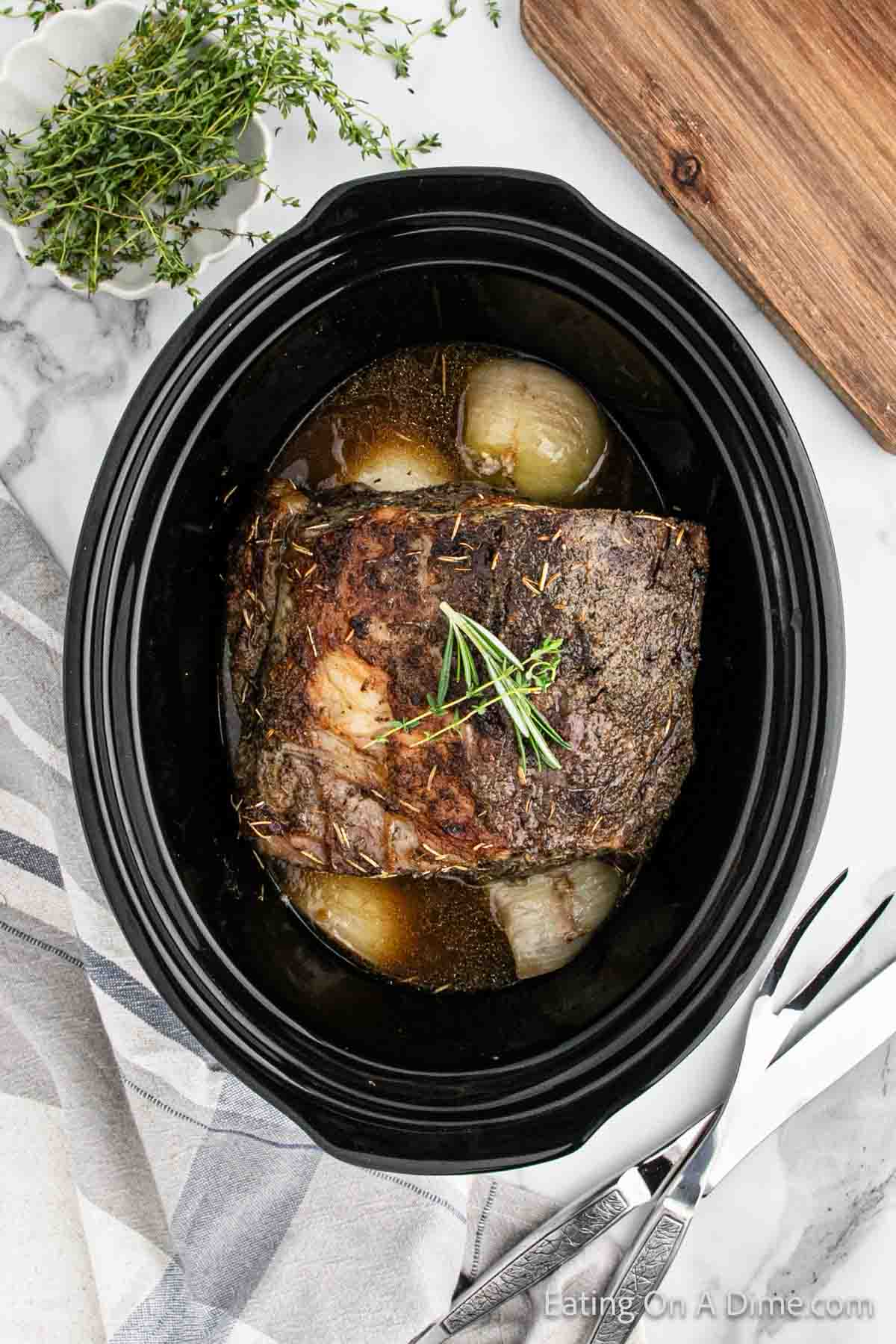
Credit: www.eatingonadime.com
Cooking Process In A Slow Cooker
Cooking prime rib in a slow cooker offers a simple way to prepare a tender and juicy roast. This method uses low heat over a long time to break down the meat fibers gently. The slow cooker keeps the prime rib moist and flavorful without much effort. Understanding the cooking process helps achieve the best results every time.
Here is how to manage the temperature, timing, and checking the doneness of your prime rib in a slow cooker.
Setting The Temperature
Set the slow cooker on low for a gentle cooking process. This slow heat helps the meat cook evenly. High settings may cook too fast and dry out the roast. Keep the lid closed during cooking to trap heat and moisture. Avoid opening the lid often, as this lowers the temperature inside.
Cooking Time Guidelines
Cook prime rib for about 4 to 6 hours on low. The exact time depends on the roast size and slow cooker model. Larger roasts need more time to cook through. Start checking the meat after 4 hours to avoid overcooking. Slow cooking allows the flavors to develop fully and the meat to become tender.
Using A Meat Thermometer
Use a meat thermometer to check the prime rib’s internal temperature. Insert it into the thickest part of the roast. For medium-rare, aim for 130°F to 135°F. Remove the roast from the slow cooker at this temperature. Let it rest to allow the juices to redistribute. The temperature will rise slightly during resting.
Flavor Enhancements
Enhancing the flavor of prime rib in a slow cooker takes simple steps that bring rich taste and aroma. The slow cooking process allows herbs, spices, and liquids to deeply penetrate the meat. This creates a tender roast packed with bold flavors. Each component plays a role in making your prime rib delicious and memorable.
Adding Herbs And Spices
Fresh herbs like rosemary, thyme, and garlic work well with prime rib. Sprinkle these over the meat before cooking. Ground black pepper and salt are essential to highlight the beef’s natural flavor. For a spicy kick, add a pinch of cayenne or smoked paprika. These seasonings infuse the meat during slow cooking, creating a savory profile.
Incorporating Liquids
Liquids help keep the meat moist and tender in the slow cooker. Beef broth or stock adds depth to the roast. Red wine or a splash of balsamic vinegar brings acidity and complexity. Use just enough liquid to cover the bottom of the cooker. The slow simmer releases flavors that blend with the meat juices, enriching the taste.
Creating A Flavorful Crust
Although slow cooking softens the meat, a crust adds texture and extra flavor. Sear the prime rib in a hot pan before placing it in the slow cooker. This browning forms a caramelized crust that locks in juices. After cooking, briefly broil the roast to refresh the crust. The contrast between tender inside and crispy outside delights the palate.
Achieving Perfect Doneness
Achieving the perfect doneness for prime rib in a slow cooker requires careful timing and technique. The goal is to cook the meat evenly while keeping it juicy and tender. Slow cooking allows the flavors to develop deeply, but controlling the temperature ensures the prime rib does not overcook or dry out.
Understanding different methods helps reach that ideal medium-rare or medium finish. Each step, from cooking to resting, plays a key role in the final texture and taste.
Low And Slow Method
Set your slow cooker to low heat for the best results. Cooking prime rib slowly lets the connective tissues break down. This keeps the meat tender and moist. The process may take several hours, but patience brings out rich flavor. Use a meat thermometer to check the internal temperature. Aim for 125°F (52°C) for medium-rare. Avoid opening the lid too often, as heat escapes and slows cooking.
Reverse Sear Technique
After slow cooking, use a hot skillet or oven to sear the prime rib. This step adds a crispy, flavorful crust. The sear should be quick to prevent overcooking inside. Searing at high heat seals in juices and gives a beautiful brown color. It also enhances the aroma, making the dish more appealing. This technique balances tenderness with texture.
Resting The Meat
Let the prime rib rest for at least 15 minutes after cooking. Resting allows the juices to redistribute inside the meat. Cutting too soon causes the juices to leak out, drying the roast. Cover the meat loosely with foil to keep it warm. Resting improves tenderness and flavor. It ensures every bite is juicy and satisfying.
Common Challenges
Cooking prime rib in a slow cooker offers convenience but comes with some challenges. Controlling temperature and moisture is crucial. The goal is tender, juicy meat without overcooking or drying out. Understanding common challenges helps achieve better results in slow cooking prime rib.
Avoiding Overcooking
Slow cookers cook meat for hours at low heat. This long cooking time can cause overcooking easily. Overcooked prime rib becomes tough and chewy. Use a meat thermometer to check internal temperature. Remove the roast once it reaches desired doneness. Timing is key to avoid overcooking.
Preventing Dryness
Prime rib can dry out if exposed to too much heat or air. Slow cookers trap moisture, but it can still evaporate. Add broth or water to the cooker to keep the environment humid. Cover the roast tightly with the lid. Avoid lifting the lid often to keep moisture inside.
Maintaining Juiciness
Juiciness comes from fat and proper cooking technique. Slow cooking melts fat slowly, keeping meat moist. Searing the prime rib before slow cooking helps seal juices. Let the meat rest after cooking to redistribute juices. This step keeps the roast tender and flavorful.

Credit: ohsweetbasil.com
Serving Suggestions
Serving prime rib cooked in a slow cooker is a treat. It pairs well with many sides and sauces. Choosing the right accompaniments makes the meal special. Here are some ideas to enhance your slow-cooked prime rib experience.
Classic Side Dishes
Mashed potatoes are a timeless choice with prime rib. Roasted vegetables, like carrots and Brussels sprouts, add color and flavor. Creamed spinach offers a rich and creamy contrast. Yorkshire pudding is traditional and perfect for soaking up juices. Simple green salads bring freshness to the plate.
Sauce And Dip Ideas
Horseradish sauce is a classic partner for prime rib. Make a creamy version with sour cream and prepared horseradish. Au jus, made from the slow cooker drippings, adds deep beef flavor. Garlic butter melted over slices enhances richness. Mustard-based sauces offer a tangy kick that balances the meat.
Presentation Tips
Slice the prime rib thin for elegant serving. Arrange slices neatly on a warm platter. Garnish with fresh herbs like rosemary or thyme. Place sauces in small bowls for easy dipping. Use colorful vegetables to brighten the plate and invite the eye.
Comparing Slow Cooker To Oven
Choosing between a slow cooker and an oven for prime rib affects the cooking process and the final dish. Each method offers unique benefits and some trade-offs. Understanding these differences helps you pick the best option for your meal and schedule.
Time And Convenience
Slow cookers take several hours, usually four to six, to cook prime rib. They allow you to set it and forget it. The oven cooks faster, often within two to three hours. Oven cooking needs more attention, like checking the temperature and resting the meat. Slow cookers free up kitchen space and reduce active cooking time. Ovens provide quicker results but require more hands-on effort.
Flavor And Texture Differences
Oven roasting creates a crispy, browned crust that many enjoy. This crust adds rich flavor and a pleasing texture. Slow cooking does not brown the meat well, so the crust is softer or absent. The slow cooker excels at making meat tender and juicy. The flavor in a slow cooker is more uniform but less intense on the surface. Oven cooking delivers a balance of crust and tender interior.
Equipment Considerations
Slow cookers are compact and use low heat over time. They are ideal for small kitchens or when oven space is limited. Ovens offer more control over temperature and cooking style. You can use roasting pans, thermometers, and broilers with an oven. Slow cookers require less cleanup and keep your kitchen cooler. Choosing equipment depends on your kitchen setup and cooking preferences.
Troubleshooting Tips
Troubles with slow cooking prime rib can happen. Fixing these issues keeps your roast delicious and tender. Use these tips to solve common problems.
Fixing Undercooked Meat
Check the meat with a thermometer. If undercooked, continue cooking on low heat. Cover the slow cooker to keep moisture. Add 15-30 minutes and test again. Avoid raising the heat too much to prevent dryness.
Reviving Dry Prime Rib
Dry prime rib needs moisture. Add beef broth or water to the cooker. Cover and let it steam for 10-15 minutes. You can also slice the meat thinly and serve with gravy. This helps bring back juiciness and softness.
Enhancing Flavor Post-cooking
Add fresh herbs or garlic butter after cooking. Let the meat rest with these for 5-10 minutes. A quick sear in a hot pan adds a tasty crust. Use a sprinkle of salt and pepper to boost flavors. These steps improve taste without extra cooking time.
:max_bytes(150000):strip_icc()/ALR-8520971-low-and-slow-prime-rib-VAT-4x3-3-6b92caba02df4860a1dfd9b2c4058c4c.jpg)
Credit: www.allrecipes.com
Conclusion
Cooking prime rib in a slow cooker works well for tender, juicy meat. The slow heat helps the flavors develop fully. It also saves oven space and reduces active cooking time. Use simple seasoning and add broth for moisture. Remember to check internal temperature for safety and doneness.
This method suits those who want an easy, hands-off prime rib dinner. Try it for a cozy, flavorful meal without fuss. Slow cooker prime rib can impress with minimal effort. Give it a try and enjoy a delicious roast.